
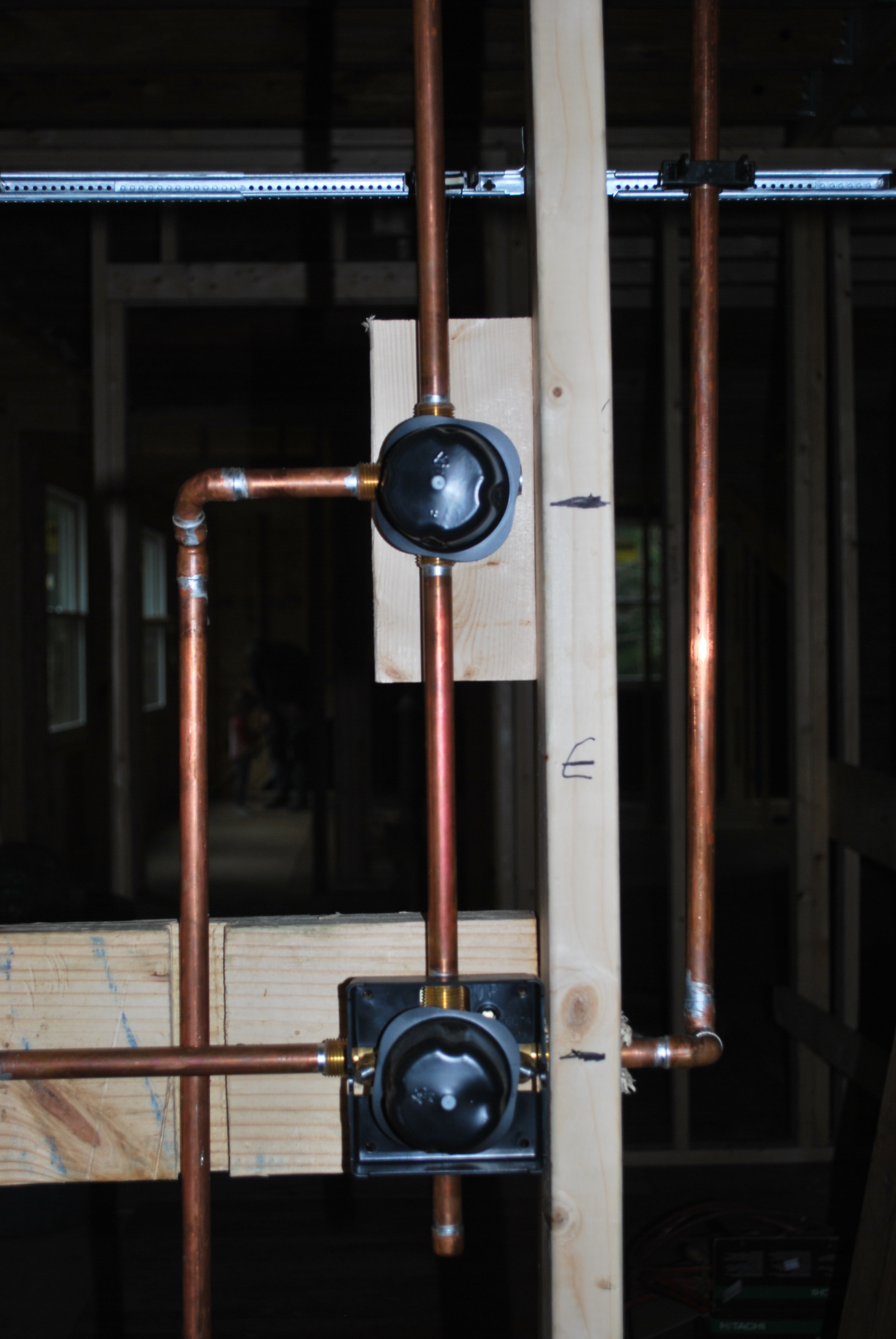
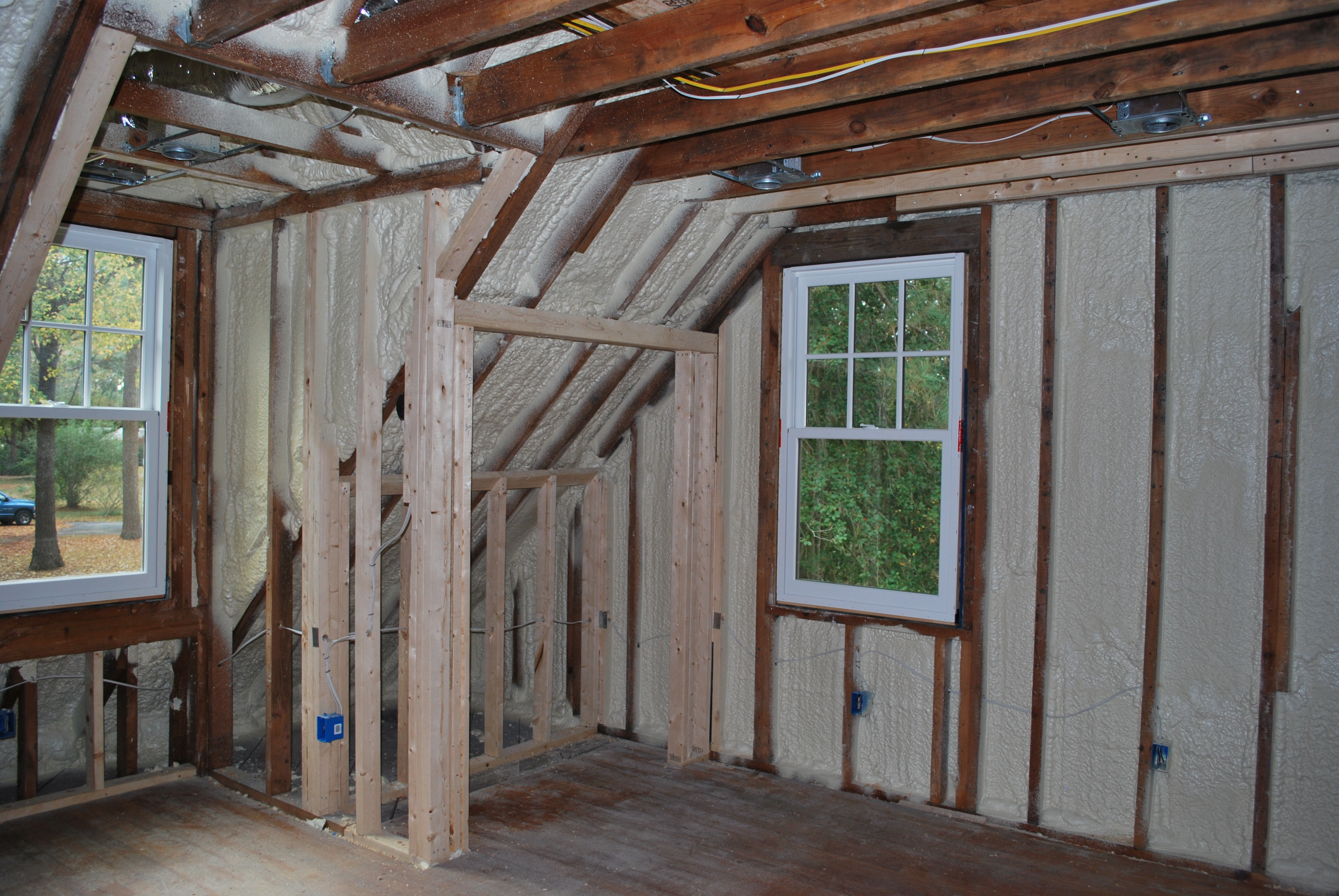
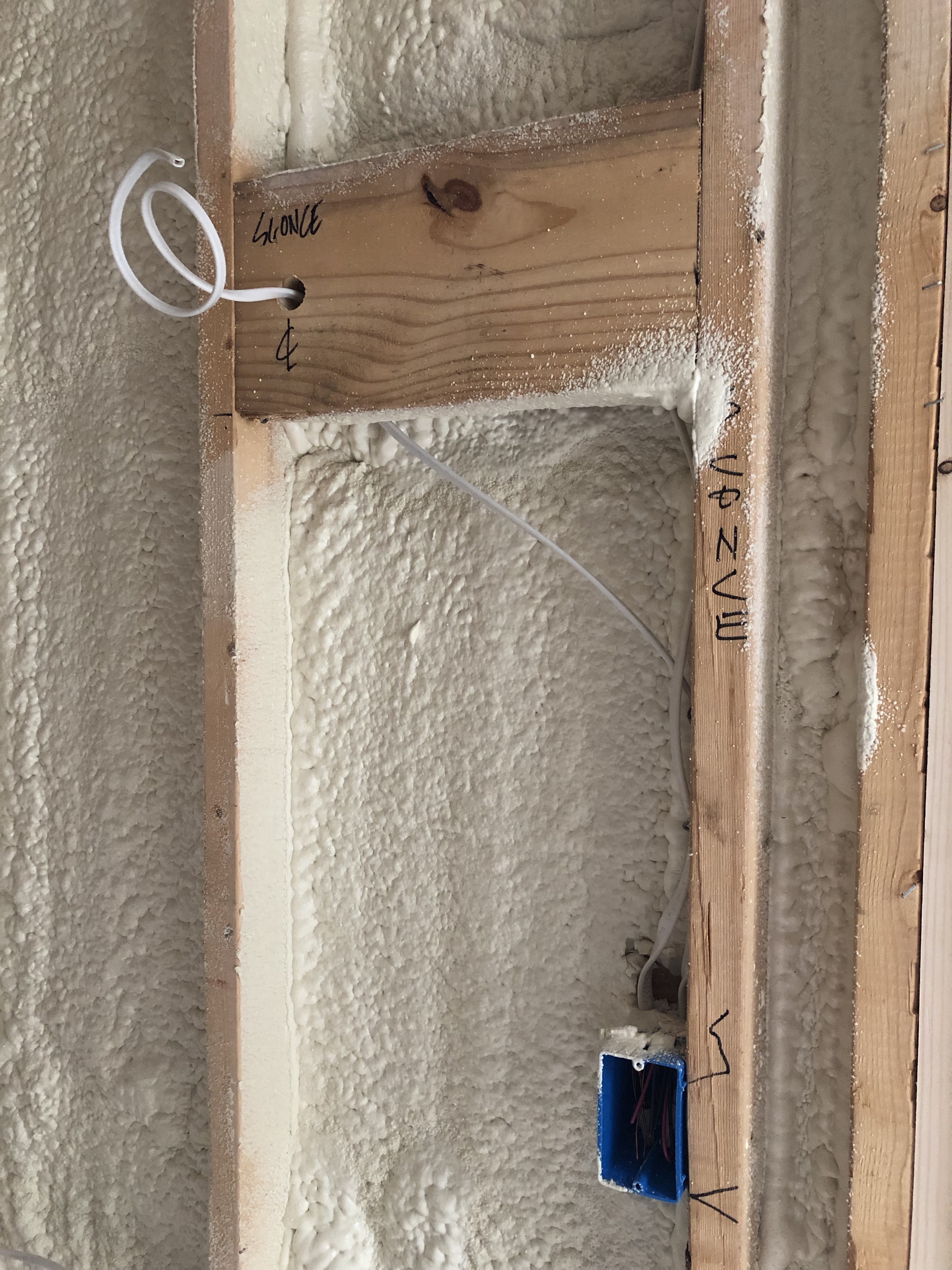
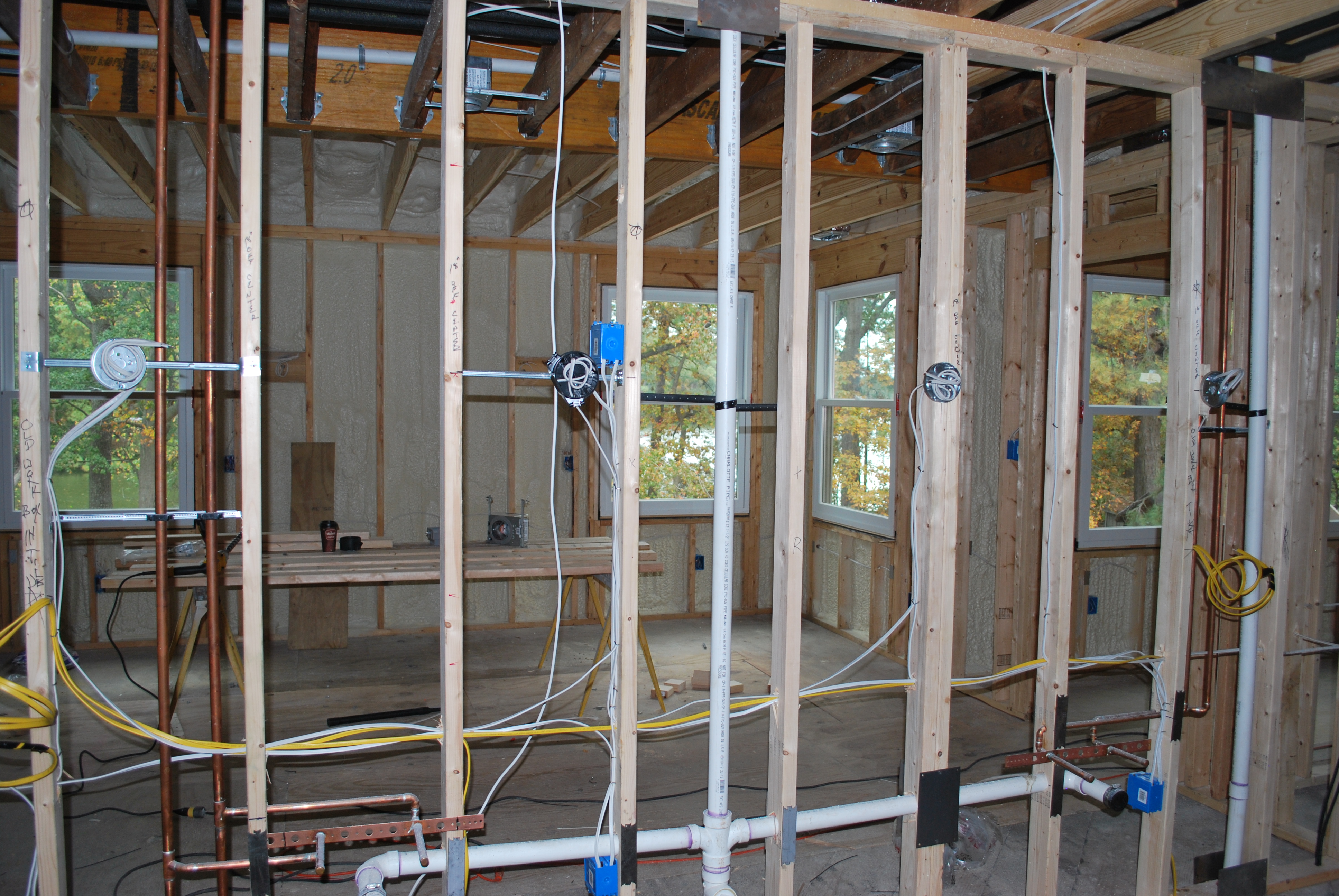
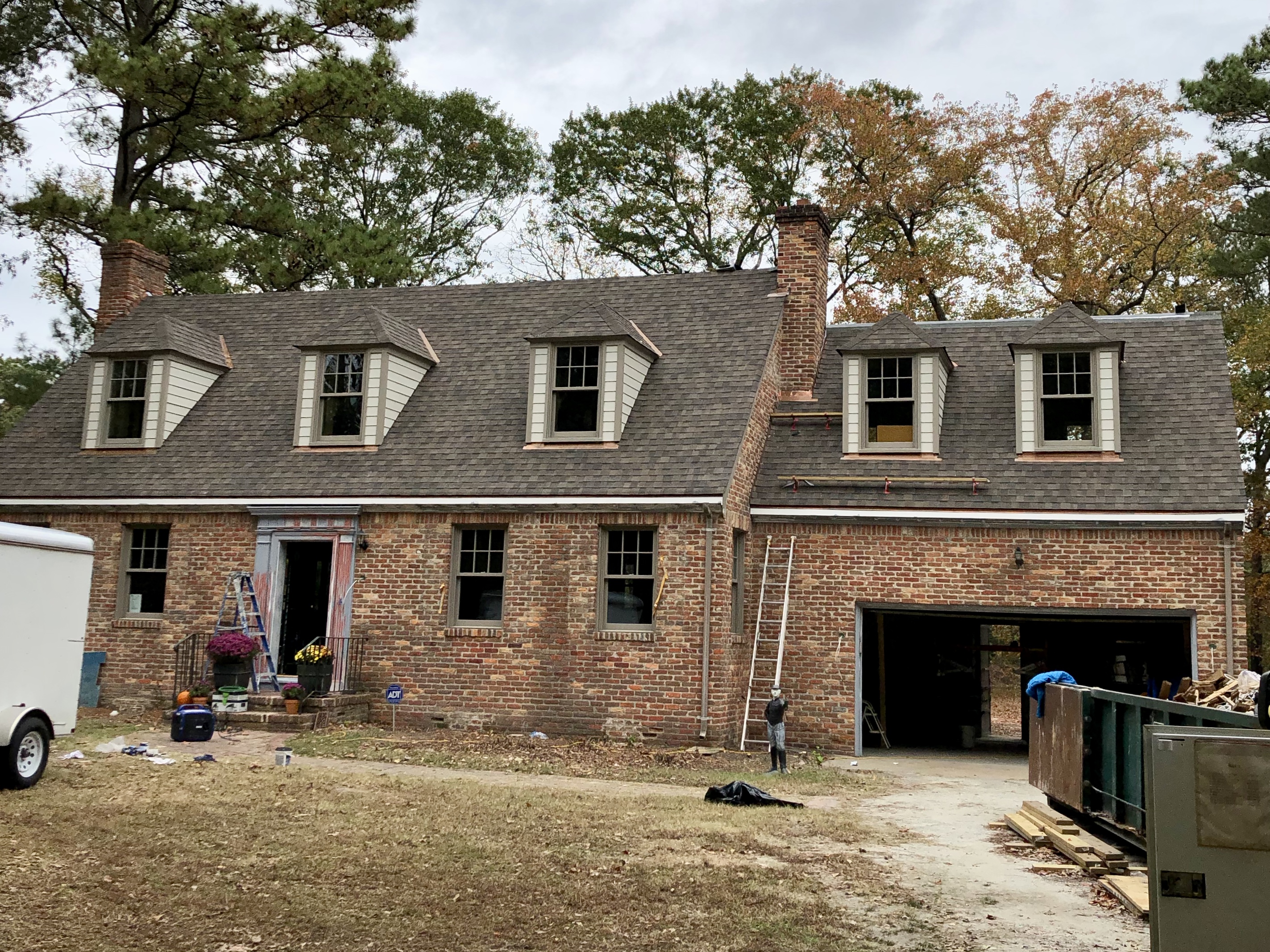
Our renovation is moving right along into some exciting territory. This month we have been working on finishing up some exterior elements (the roof and siding), planning and roughing-in plumbing and electrical fixtures and preparing for insulation. Needless to say, I don’t have many glamorous pictures of tubes, wires and spray foam in the walls.
In that light, I thought this would be an opportune time to discuss some of the thought that has gone into crafting our home. A “smart” home can take many forms:
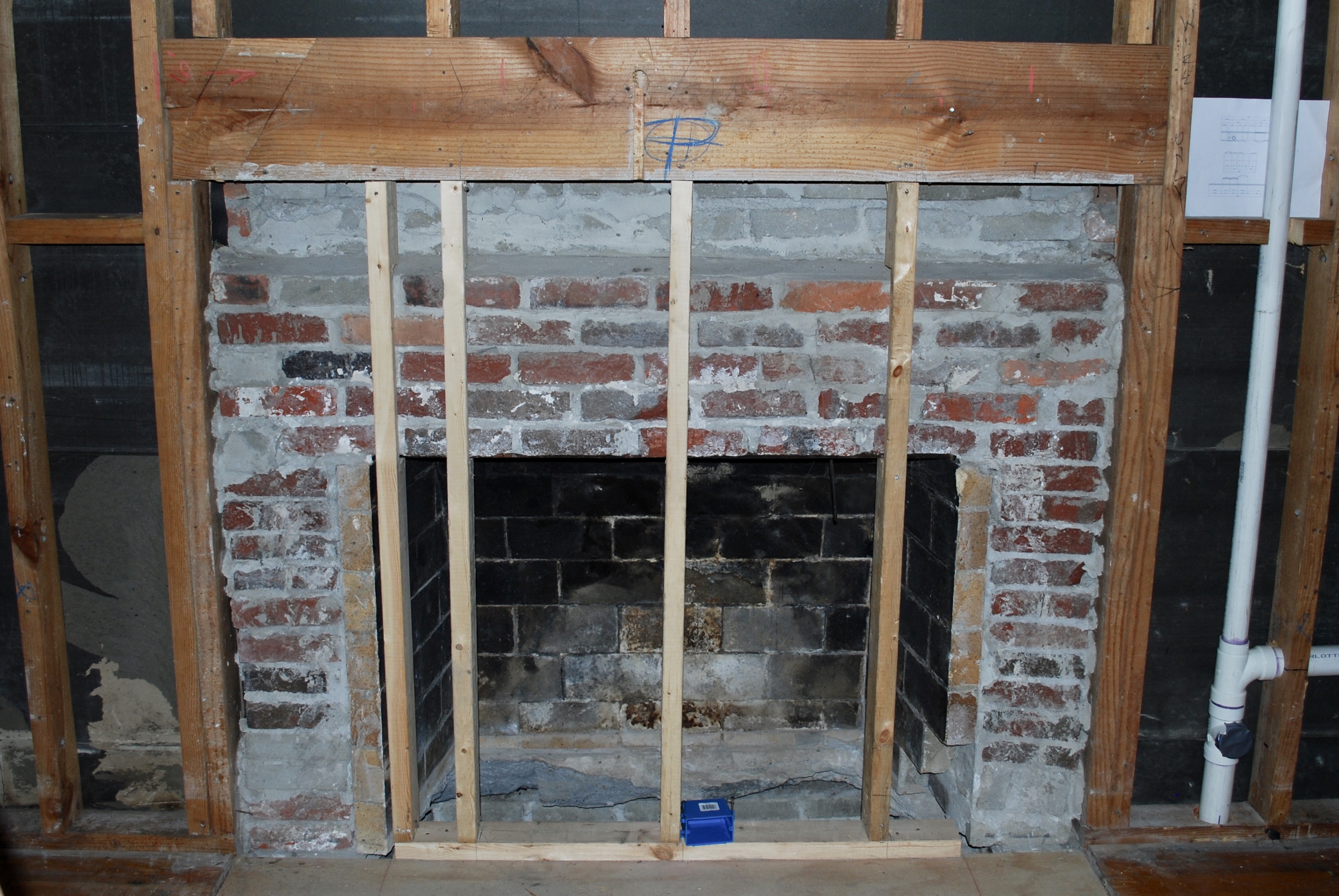
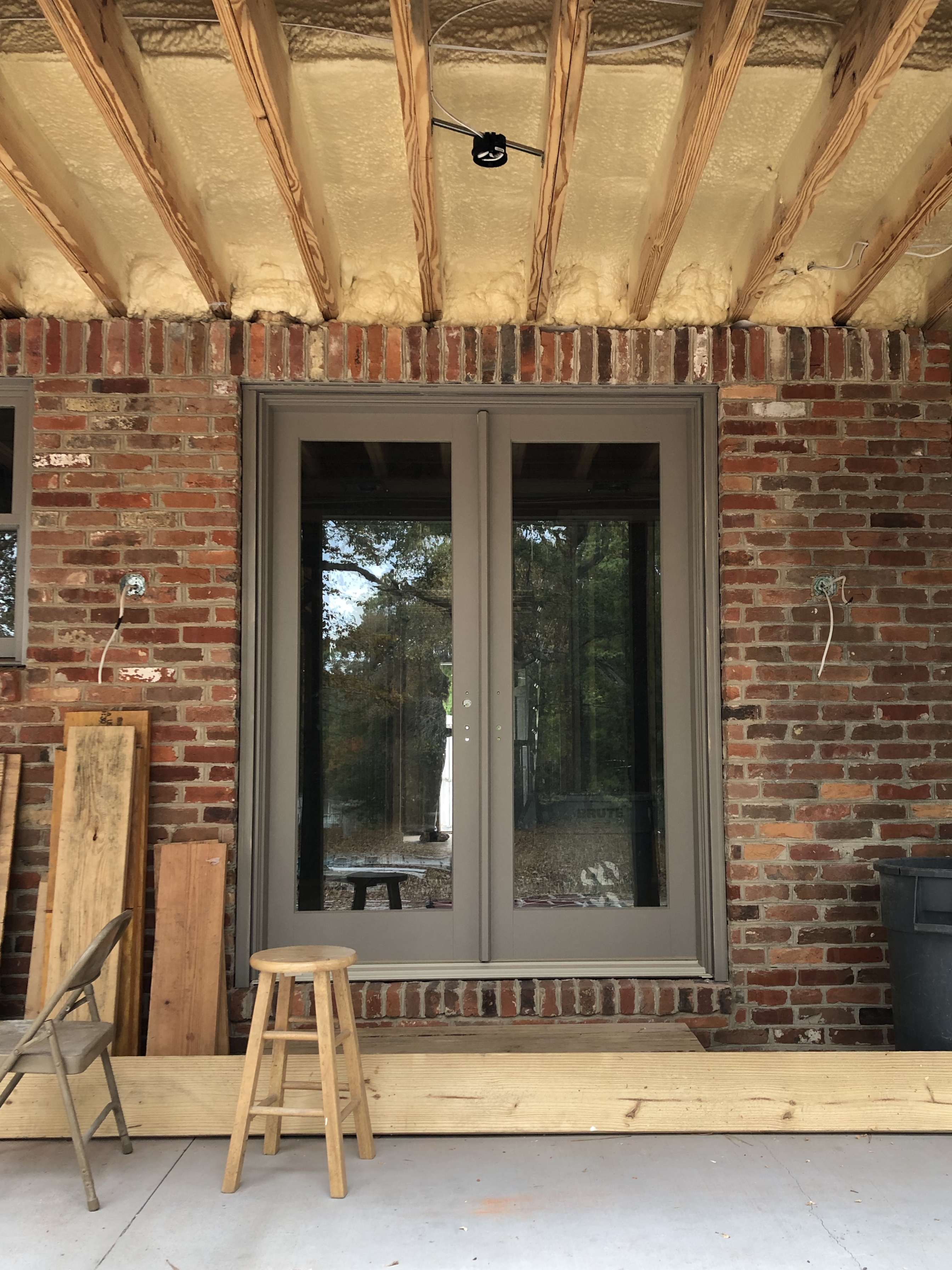
(1) Reduce, reuse and recycle: To start, I look at this renovation in part as a giant recycling project. Rather than clearing a lot or tearing down an old structure for a new build, we decided to improve on something preexisting. This not only gives the house a unique character, but it also cuts down on waste. We recently learned that the bricks for our exterior were salvaged from an old church in downtown Norfolk when it was originally built in 1950. There is no need to improve upon something originally crafted with such artistry, and they will last for centuries. Of course the challenge of renovating is working within the framework of a preexisting structure with sagging beams, irregular measurements and confinement of space. For instance, we had to sacrifice the operable fireplace in the old living room to make space for the large kitchen and kitchen island that were on the top of my priority list. This will be one of the last photos of our dear fireplace before it gets covered with spray foam and dry wall, which brings me to my next point.
(2) Energy efficiency: We are going to great lengths to improve upon the energy efficiency of this old house. First, we are encapsulating the crawl space and attic to drastically reduce the amount of conditioned air sneaking out and unconditioned air sneaking in. Second, we are using a highly air tight closed cell spray foam insulation, which goes in this week. Here is a nice article about some of the benefits of spray foam online: https://www.retrofoamofmichigan.com/blog/open-vs-closed-cell-foam-insulation
Previously, there was no central air, which we will be remedying, and the house was on oil heat. We will be changing our heating to natural gas and will be implementing two zones: one upstairs and one downstairs. I cannot pretend to be well versed in the environmental consequences of oil versus natural gas heating, but I at least know that it will be saving us lots of money each winter. The two zones makes a more flexible system to better target heating needs. Converting to geothermal heat was another awesome option but required deep pockets.
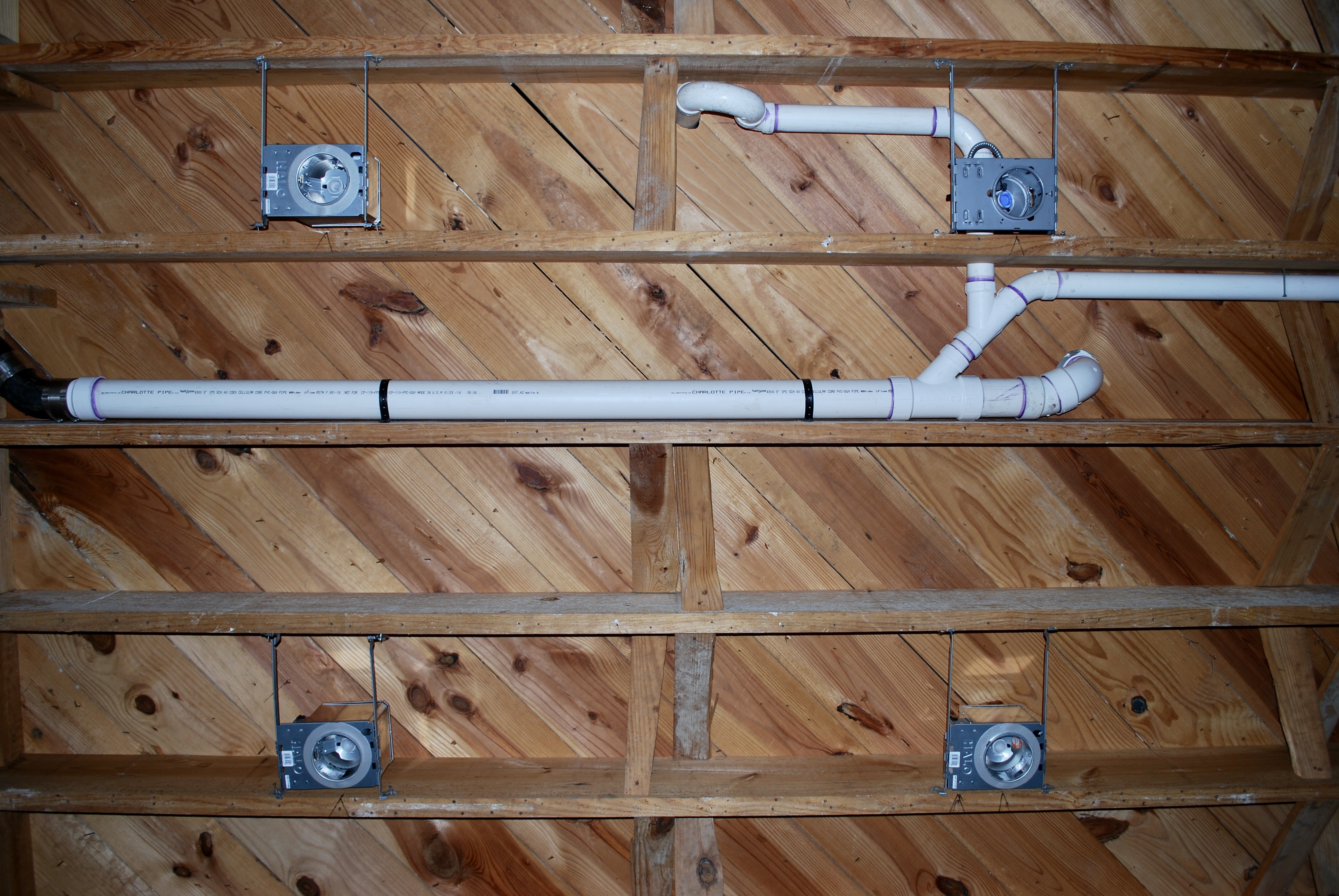
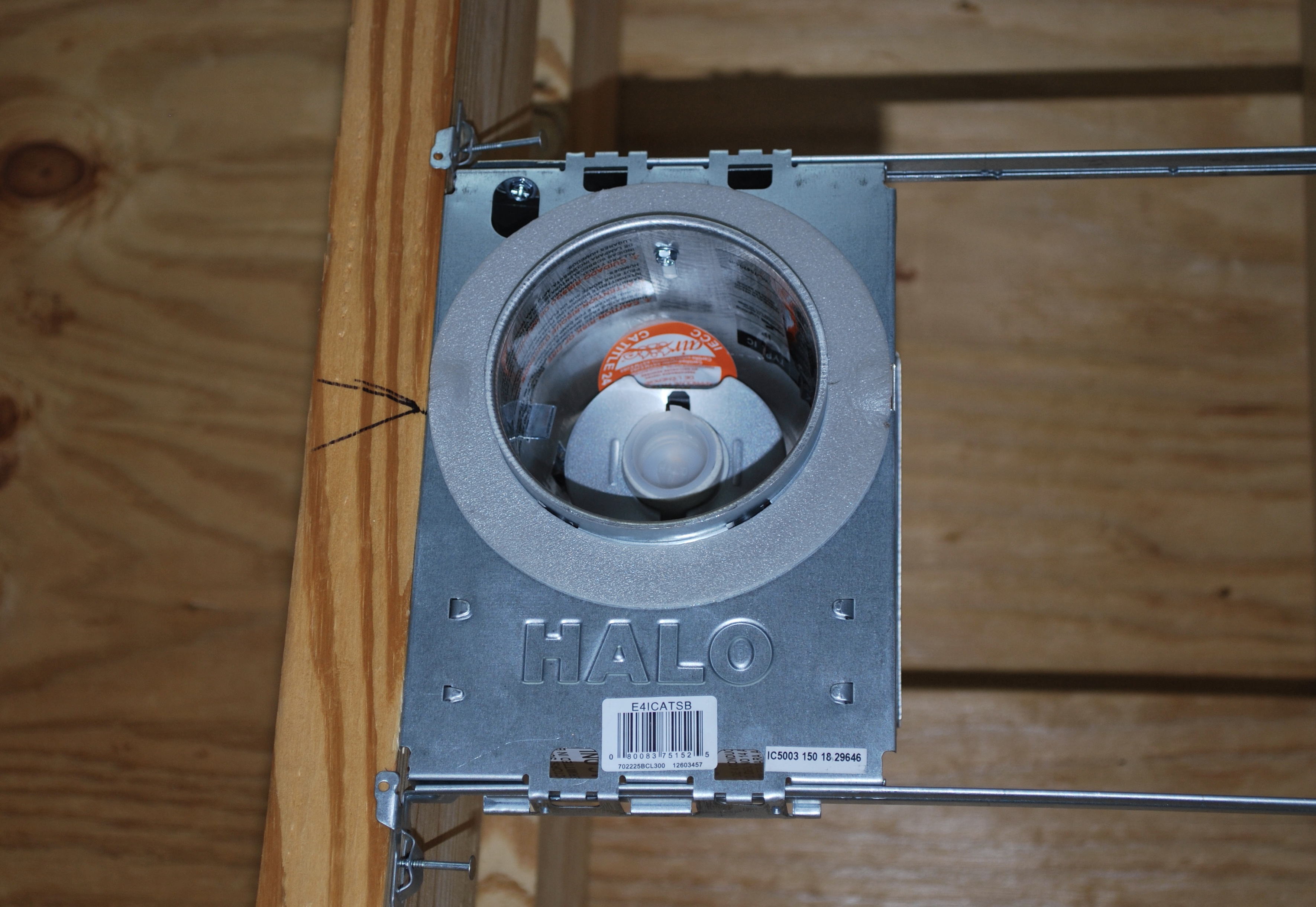
Hot water will be supplied using an on demand tankless water heater. We had one of these in our old house, and it was amazing. It only heats the water needed, AND there is an endless supply. We are also installing some 70 or so LED can lights throughout the house that will be on dimmers. I understand this is the energy efficient lighting of the future! To round out our environmental efforts, we will have a compost pile in our backyard.
(3) Technology: I just returned from a trip to Minnesota to visit my company’s headquarters. It was a great trip with fantastic people, an inspiring corporate vision, an overall solidifying experience. As an added bonus, some of my colleagues are highly technically savvy and introduced me to the exciting concept of home automation.

What is home automation? Well I am happy you asked! It ranges from a thermostat that automatically turns on and off depending on normal daily routines (Nest now owned by Google is a leader in the field) to a mailbox motion sensor texting when mail has arrived. Lights, music, TVs, coffee makers can be controlled by a voice command anywhere in the house. The garage door will automatically open when my car pulls in the driveway. The applications are nearly endless, and the field is growing like wildfire!
How does it work? Well there are many companies that are working to streamline the process. Many of leaders of the pack in innovation are the typical players: Amazon, Google, and Apple. A home can be outfitted with several different smart devices such as light bulbs, outlets, thermostats, security cameras, etc. that communicate via a common language such as Z-Wave or Zigbee through a Smart Home Hub (Samsung SmartThings, Apple HomeKit, Wink, among others). This way, with a click of a button on your smart phone, or at a set time, a routine can be set to open blinds, turn on/off lights, set the thermostat, and turn on the house alarm at one time. The options are endless. If Apple’s Siri, Google Assistant or Amazon’s Alexa are strategically placed, a voice command can activate music to play in certain rooms or display the camera feed from the baby monitor in the nursery.
The possibilities are endless. Our budget is not. For our initial investment, we are going to start small and build as the home automation field develops. We will strategically place some GE switches and outlets in key areas for maximum use. We are going to try the ecobee4 for our thermostat and place some other Alexa devices around the house for sound and video capabilities. I would love to eventually add smart blinds, security cameras, motion detectors and more! Hayes is skeptical of home automation. I embrace it. If you know us, this is not surprising. It will be exciting to see what the future holds. What do you think?
GE switches
GE outlets
ecobee4
Sonos with Alexa
Echo Dot
Echo Spot
Well that’s all the information I have for you this month. Thanks for checking in!











 Small Batch Builders